
Image Missing
BLOG
The ethnic food of northern Vietnam is one of the highlights of any trekking tour. Each ethnic group has its own culinary traditions shaped by the mountains they live in, the crops they grow and the animals they raise. This guide covers the food you are most likely to encounter on our tours - from Hmong smoked meats in Sapa to White Thai bamboo rice in Mai Chau.
Hmong cuisine
Our heritage is hunting, so meat features highly in our diet. The Hmong kitchen revolves around the bếp lửa - the fire pit at the centre of the home. It burns almost continuously, used for cooking, heating and most importantly for smoking meat which hangs on hooks above the fire for weeks at a time.
Black pig is the king of Hmong cooking. Our mountain pigs (lợn cắp nách - literally “armpit pig” because they are small enough to carry under one arm) roam free in the villages, eating corn and forest scraps. The meat is leaner, firmer and far more flavourful than lowland farmed pork. We roast them whole over charcoal for celebrations, grill chops on bamboo skewers, or boil and serve with mắc khén dipping salt - a ground mix of wild Sichuan peppercorns and salt that creates a numbing, citrusy flavour. Mắc khén goes on everything.
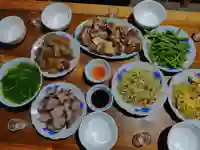
The oil left over from frying smoked pork is used to stir-fry wasabi spinach (rau cải ngọng) and the combination is delicious. Despite the name, it is not related to wasabi or spinach - it is a type of highland mustard green with thick crunchy stems and a peppery bite. Fried in pork fat with garlic, it is served at every homestay meal.
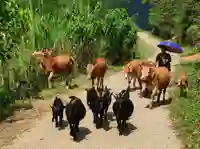

Image Missing

Image Missing
Signature Hmong dishes
Thắng cố - horse meat stew
The most iconic Hmong dish. A thick, herbal stew traditionally made from horse organs - heart, liver, lungs, intestines, kidney and tongue - slow-cooked in a large cauldron with up to a dozen herbs and spices including thảo quả (black cardamom), star anise, lemongrass, ginger, galangal and dried chilli. The cooking takes 3-5 hours and the flavour is intense and gamey.
Thắng cố is traditionally a market-day dish. Men gather around a communal pot, eating and drinking rice wine together. At some markets the pot is never fully emptied - new ingredients are added throughout the day, building incredible depth of flavour. Modern versions sometimes use buffalo or beef.
Where to try it: Bac Ha Sunday market (the most famous), Dong Van Sunday market, Can Cau Saturday market.
Mèn mén - corn flour
In the rocky karst highlands of Ha Giang where rice cannot grow, corn was the staple food for centuries. Mèn mén is dried corn kernels soaked, ground on a stone mill into coarse flour, then steamed in layers until it forms a fluffy, crumbly mass - somewhere between a porridge and a cake. It has an earthy, simple flavour and is eaten with vegetables, chilli sauce or fried pork.
Thịt hun khói - smoked meat
Large strips of buffalo or pork are rubbed with salt and mắc khén pepper, then hung above the kitchen fire pit. The constant smoke from weeks of daily cooking slowly cures the meat until it turns dark brown on the outside and keeps for months without refrigeration. To eat, it is sliced thin and fried until the edges are crispy. The texture is chewy like jerky with an intense smoky, salty flavour.
Hmong egg rolls
Eggs are fried very thin like a huge crepe, then spring onion and herbs are added and the whole thing is rolled up tight. You will see them everywhere in Dong Van and Ha Giang market restaurants. Simple but good.
Hmong sausage
Pork intestine stuffed with minced pork mixed with local herbs, sometimes with blood. Smoked above the hearth or grilled over charcoal.
Red Dao cuisine
The Red Dao share many ingredients with the Hmong but their food tends to be spicier and more herbal. The Red Dao are famous herbalists - the same knowledge they use for their traditional medicinal baths carries into their cooking. Fresh chillis, dried chillis and chilli pastes are used more liberally than in Hmong food.
Fermented and pickled foods feature heavily. Sour bamboo shoot soup (măng chua) is a signature Red Dao dish - bamboo shoots are fermented until tangy then cooked into a warming broth. They also do more steaming in banana leaves and prepare more elaborate pickled vegetable dishes.
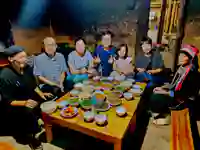

Image Missing
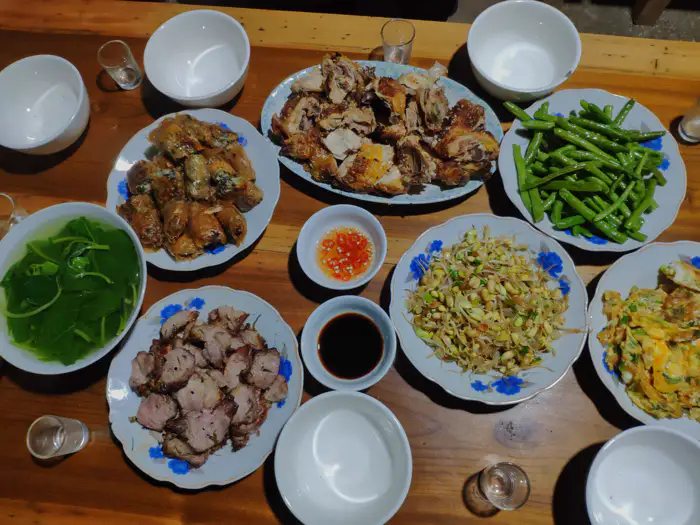
Image Missing
White Thai cuisine (Mai Chau)
The White Thai live in the valleys and their food is noticeably different from highland Hmong cooking - lighter, more aromatic, with more fresh herbs, raw vegetables and fish from the rivers.
Cơm lam - bamboo tube rice
The iconic Thai ethnic dish. Fresh young bamboo tubes are cut and packed with glutinous rice that has been soaked overnight, sometimes with a little coconut milk. The open end is plugged with banana leaf and the tubes are roasted slowly over charcoal for about an hour, turned regularly. The bamboo chars on the outside but imparts a subtle sweet, green fragrance to the rice inside. To eat, the charred outer layer is peeled away and the rice cylinder is sliced into rounds. Eaten with sesame salt or grilled meats.
Pá pỉnh tộp - grilled fish
Whole freshwater fish stuffed with lemongrass, galangal, mắc khén, herbs and chilli, wrapped in banana leaf and grilled over charcoal. A signature Mai Chau dish.
Lạp - minced meat salad
Similar to Lao laap. Minced pork or fish mixed with herbs, toasted rice powder, lime and chilli. A distinctly Thai ethnic dish that you will not find in Hmong cooking.
Rượu cần - jar wine
Fermented sticky rice in a large ceramic jar, drunk communally through long bamboo straws. This is a White Thai tradition - everyone gathers around the jar and drinks together. Different from the distilled rice wine of the Hmong.
Rice, sticky rice and the five colours
No meal is complete without rice. Sticky rice (xôi) is a staple across all ethnic groups in the highlands. But the showpiece is xôi ngũ sắc - five-colour sticky rice - where each colour comes from a natural plant dye:
- Red - gấc fruit (Momordica cochinchinensis) or lá cẩm (magenta plant)
- Yellow - turmeric root
- Purple - lá cẩm (magenta leaf)
- Green - pandan leaf juice
- White - natural undyed rice
The rice is soaked separately in each dye overnight, then steamed and arranged together in a colourful mound. No artificial colours are used. You will see this at festivals, weddings, Tết and at the weekly markets. The five colours represent the five elements.
The multi-coloured rice is also pressed into cakes - especially bánh chưng and bánh dày which are essential during Tết (Lunar New Year) celebrations.
Drinks
- Rượu ngô (corn wine) - distilled from fermented corn. Strong, clear, slightly sweet. Very common in Ha Giang.
- Rượu gạo (rice wine) - distilled from fermented rice. Smoother than corn wine. The standard in Sapa.
- Rượu táo mèo (sơn trà apple wine) - made from the small sour mountain apple native to the Sapa highlands. Sweet-sour, lower alcohol. A local specialty.
- Rượu cần (jar wine) - fermented glutinous rice in a jar, drunk through bamboo straws. A Thai/Muong tradition.
Rice wine is central to all social gatherings and ceremonies. Guests are always offered a drink - refusing is considered impolite.
Market food
The weekly ethnic markets (Bac Ha Sunday, Can Cau Saturday, Dong Van Sunday) are as much about food as they are about trading. Here are some things to look out for:
- Thắng cố stalls with the communal pot bubbling away
- Phở chua - a Bac Ha specialty of cold rice noodles with crispy pork, peanuts, herbs and a sweet-sour sauce
- Grilled corn on the cob - charcoal-grilled, sometimes brushed with fat
- Xôi packets - sticky rice wrapped in banana leaf with various toppings
- Bánh rán - sweet fried sesame balls made from glutinous rice
- Grilled pork skewers (chả) - minced pork with herbs on bamboo sticks
- Fresh sugarcane juice - pressed at market stalls

Image Missing

Image Missing
Cooking traditions
Traditional cooking was done over the bếp lửa - a wood fire pit in the centre of the house. The fire served triple duty: cooking, heating and smoking meat. Bamboo is the fuel of choice because it is free and burns hot. Carbon monoxide is a concern though, so many families have now moved the cooking fire to a side room or a separate outdoor kitchen. Gas stoves are gaining popularity but fire cooking remains preferred for the flavour it gives.
Bamboo plays a huge role beyond fuel. It is used as a cooking vessel (cơm lam), for making steamers, chopsticks, ladles and skewers. Banana and dong leaves are used for wrapping food for steaming or grilling - they keep moisture in and add their own subtle flavour.
Food and ceremony
Food is central to every important occasion in ethnic highland life. At Tết, families slaughter a pig (often a black pig), make sticky rice cakes and prepare elaborate multi-dish meals. At weddings, multiple pigs are needed and the feast is expected to be generous - the groom’s family provides the animals while the bride’s family cooks. At the Gầu Tào spring festival, communal eating with thắng cố and rice wine brings everyone together.
Food offerings of rice, wine and chicken are placed on the family altar for ancestor worship. During soul-calling ceremonies, a shaman may require the sacrifice and cooking of a chicken or pig as part of the ritual.
Vegetarian options
If you come on one of our tours but you are vegetarian, please let us know in advance and we will arrange a different menu for you. There are plenty of vegetable dishes in ethnic cuisine - stir-fried greens, bamboo shoots, tofu, sticky rice, fresh herbs and soups. The homestay families are very accommodating once they know in advance.